




America’s food map has never been more vibrant. Charleston just entered the MICHELIN Guide. Austin’s food truck and taco culture is at its peak. Asheville’s farm-to-table scene turns the surrounding mountains into one of the most compelling food regions in the country. New Orleans is perennially essential. Portland, Maine, punches well above its size. This summer, any one of these five cities can anchor a trip built entirely around eating.
There’s a growing number of travelers who plan their trips in reverse. They don’t choose a destination and then figure out where to eat. They choose where to eat and then book the flight. If that sounds familiar, this guide was written for you.
The best USA food cities this summer offer something beyond good restaurants. They offer a distinct sense of place that comes through in the food: in the spices, the techniques, the produce, the traditions, and the people running the kitchens. The five cities below each have a food identity strong enough to carry an entire trip.
Charleston, SC: The South’s New Culinary Star
Charleston is having a defining food moment. The city joined the MICHELIN Guide in late 2025, bringing international recognition to what Southern food lovers already knew: Charleston’s chef community has been doing serious, ambitious work for years. The cuisine here is grounded in Lowcountry tradition (seafood-heavy, rice-centered, African-influenced), and chefs who know exactly what they’re working with push it forward.
Michelin’s own write-up on Charleston notes the city’s ability to blend approachable neighborhood spots with genuinely world-class dining within a few blocks of each other. The historic downtown is walkable, which makes restaurant-hopping easy. Shrimp and grits, she-crab soup, and fried chicken with hot honey are all worth seeking in their Charleston interpretations.
Summer in Charleston means oyster roasts, fresh local shrimp at their peak, and outdoor dining on porches that feel like they belong to a different era. Plan at least two nights to eat properly.
Where to eat: Husk (seasonal Southern cooking in a landmark building), Rodney Scott’s BBQ (wood-fired whole hog from a pitmaster who won a James Beard Award), Leon’s Oyster Shop (casual, excellent fried chicken and raw bar).
Austin, TX: BBQ, Breakfast Tacos, and Food Trucks
Austin operates at full volume in summer: music venues packed, food trucks running past midnight, and lines forming before 10 a.m. at the city’s legendary BBQ spots. The food culture here is eclectic and democratic. A $3 breakfast taco from a cart on South Congress can be just as satisfying as a meal at a celebrated restaurant, and the locals know both.
Food Drink Life’s reporting on standout US summer cities puts Austin at the top for sheer energy and variety. The breakfast taco alone is worth the trip: scrambled eggs, potato, and whatever fillings you want, wrapped in a fresh corn or flour tortilla at a spot that’s been doing this since before the food media discovered the city.
For BBQ, Franklin Barbecue is the famous stop (yes, the line is worth it), but the city now has a constellation of excellent alternatives. Micklethwait Craft Meats and LeRoy and Lewis have developed devoted followings. And Austin’s food truck parks, particularly on South First Street and East 6th, offer a rotating roster of cuisines that reflects just how international the city’s food scene has become.
Where to eat: Franklin Barbecue (legendary brisket, arrive early), Veracruz All Natural (best breakfast tacos in the city by many accounts), and Uchi (the sushi restaurant that put Austin on the fine dining map).
In Austin, the best meal of the day is often a $3 breakfast taco eaten standing up outside a food truck at 8 a.m.
Asheville, NC: Craft Beer and Appalachian Farm Tables
Asheville sits in the Blue Ridge Mountains and draws a crowd that overlaps significantly: hikers, craft beer enthusiasts, and serious food travelers. The food culture here is defined by the land surrounding it: Appalachian ingredients (ramps, pawpaws, sorghum, and locally milled grains); farm-to-table restaurants that actually source from nearby; and a BBQ tradition that pulls influence from both the Carolina mountains and valleys.
The Michelin guide’s North America food travel overview calls Asheville’s culinary scene “creative Appalachian cuisine,” which is a useful frame. This isn’t Lowcountry food or Texas BBQ. It’s something rooted in a specific geography that makes it unlike anything else in the region. Downtown Asheville is compact and walkable, making it easy to cover multiple restaurants in a single evening.
The craft brewery scene is genuinely exceptional. Sierra Nevada’s East Coast flagship, Wicked Weed, and dozens of smaller taprooms give Asheville more brewery density per capita than almost any American city. Food and beer pairings here are worth exploring deliberately rather than accidentally.
Where to eat: Curate (Spanish-influenced tapas that uses local ingredients brilliantly), 12 Bones Smokehouse (Appalachian BBQ, cash only, worth it), and White Duck Taco Shop (creative tacos with local sourcing throughout).
New Orleans, LA: America’s Undeniable Food Capital
New Orleans is the city that requires the least explanation for a food traveler. It has a cuisine that is entirely its own, built from French, West African, Spanish, and Native American influences over three centuries. Gumbo, jambalaya, beignets, po’boys, muffulettas, and a dozen other dishes were invented here and still taste best here.
Indian Eagle’s guide to US food cities lists New Orleans as an essential stop, noting that the city’s culinary identity is inseparable from its culture, music, and history. That’s accurate. Eating at Commander’s Palace or Dooky Chase is a historical act as much as a dining experience.
Summer in New Orleans is hot and humid, which is relevant because the city’s food was designed for exactly this climate. Cold Sazerac cocktails. Sno-balls from a neighborhood stand. Cold brew cafe au lait at a French Quarter coffee counter. The food and drink culture is calibrated to the weather in a way that makes summer feel like the right time to be there, not a compromise.
Where to eat: Commander’s Palace (a Creole institution with jazz brunch on weekends), Cafe du Monde (beignets and cafe au lait, 24 hours), and Dooky Chase (where Leah Chase cooked for civil rights leaders; the gumbo z’herbes is extraordinary).
Portland, ME: Lobster, Seafood, and a Thriving Chef Scene
Portland, Maine, consistently surprises people who expect a sleepy fishing town and find instead one of the most concentrated restaurant scenes in the country for a city of its size. The harbor is still there, and the seafood is as good as anywhere in New England, but what surrounds it is a serious chef community doing ambitious, ingredient-driven cooking.
Periodic Adventures’ best US food cities guide ranks Portland highly for the combination of seafood excellence and culinary variety. Fore Street, one of the most influential restaurants in Maine, has been sourcing locally and cooking over wood fires since 1996. The wider Old Port neighborhood around it now has dozens of excellent options.
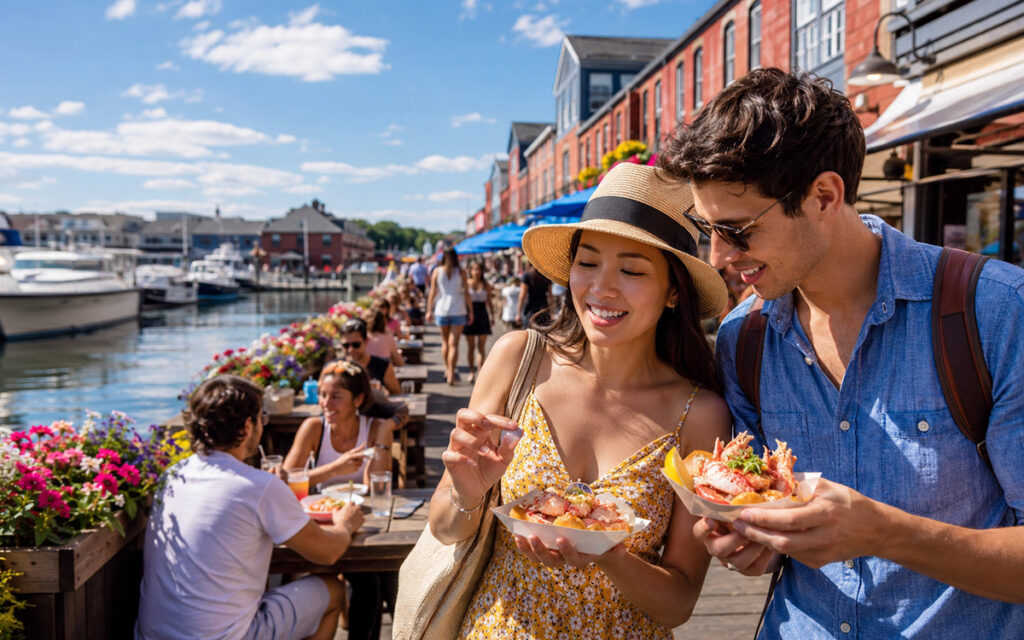
Summer is peak season for Portland, and that means the best lobster. The waterfront shacks serve whole steamed lobster with corn and drawn butter at picnic tables with harbor views. It’s the quintessential New England summer meal, and it’s very difficult to beat. Orangism’s exploration of global food destinations puts the Maine lobster experience in good context among the world’s great regional food traditions.
Where to eat: Fore Street (wood-fired, locally sourced, reservations essential); The Highroller Lobster Co. (lobster rolls in a casual setting near the waterfront); and Eventide Oyster Co. (raw bar and creative seafood in an atmosphere that feels distinctly Maine).
Conclusion
Any of these five cities can anchor a summer trip built around food. Charleston for the Lowcountry and the new fine dining energy. Austin for BBQ, tacos, and the city’s relentless food creativity. Asheville for mountain farm tables and craft beer. New Orleans because it’s New Orleans. Portland for the best lobster and a food scene that just keeps getting better.
For more food, drink, and travel inspiration, visit Orangism at orangism.com, your guide to eating, drinking, and exploring with confidence and curiosity.
Frequently Asked Questions
What is the best US city for food lovers to visit in summer 2026?
There’s no single answer because it depends on what you’re after. Charleston offers Lowcountry seafood and new MICHELIN-level dining. Austin delivers the full BBQ and taco culture experience. New Orleans is the most distinct food city in America. Portland, Maine, serves the country’s best summer lobster. All five are worth serious consideration.
When is the best time to visit New Orleans for food?
New Orleans is a year-round food destination, but spring and early summer offer good weather before the peak heat arrives. The city’s restaurant scene doesn’t have an off-season. If you’re visiting in July or August, lean into the city’s cold drinks and sno-balls tradition, which perfectly matches the summer heat.
Is Charleston, SC worth visiting just for food?
Yes. Charleston has one of the most compelling food scenes in the American South, combining Lowcountry tradition with serious chef-driven restaurants now recognized by the MICHELIN Guide. Two days in Charleston focused on food, from casual waterfront seafood to fine dining, will cover a lot of ground and leave you wanting more.
What makes Austin’s food scene unique?
Austin combines Texas BBQ traditions (among the best in the country), a deep Mexican and Tex-Mex influence reflected in its legendary breakfast taco culture, and a diverse food truck and restaurant scene built by chefs from across the country and world. It’s one of the few cities where a $3 street taco and a $150 tasting menu can both be genuinely exceptional.
How many days do you need to explore a city’s food scene properly?
Three to four days is ideal for a food-focused city visit. This gives you enough meals to cover multiple neighborhoods, try different cuisines or food traditions, return to a spot you loved, and allow for spontaneous discoveries. Two days is workable if you plan well. A single day barely scratches the surface of any of the cities on this list.


