




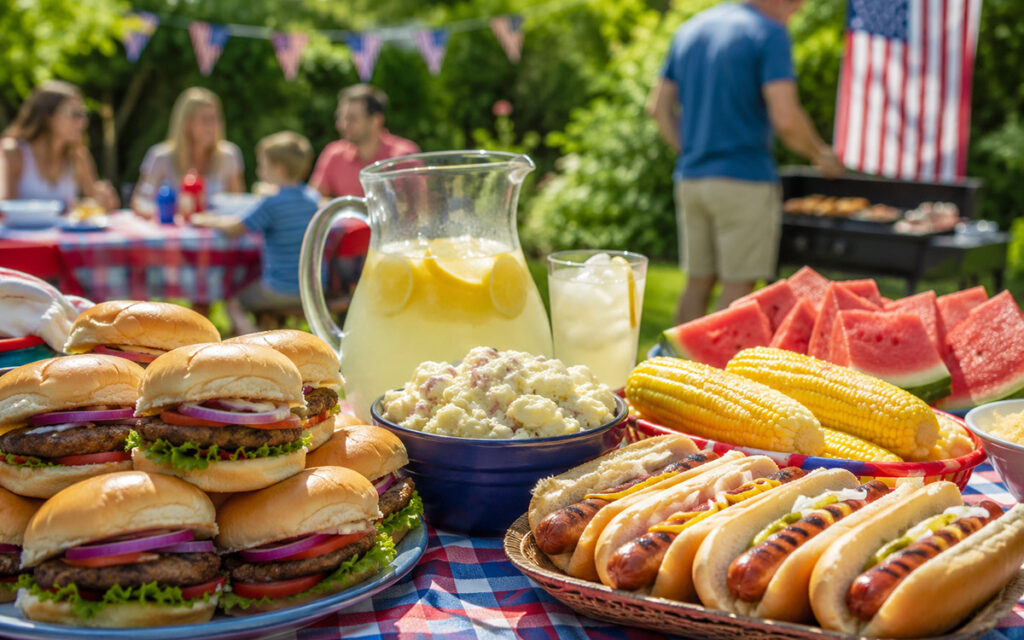
Some foods belong to summer the way fireworks belong to the Fourth of July. Backyard BBQ with slow-smoked ribs. Corn on the cob eaten standing up. A root beer float on a hot afternoon. Watermelon cut into wedges on the porch. These aren’t just foods: they’re the full sensory package of an American summer. Here’s what makes each one worth eating at its best.
American summer food is deeply regional and yet surprisingly consistent in its archetypes. The specific BBQ sauce varies based on whether you’re in North Carolina, Kansas City, or Memphis, but the ritual of slow-cooked meat on a summer afternoon remains the same. The corn might come from a farm stand in Iowa or a produce market in California, but the experience of eating it hot with butter and salt is universal.
These foods are classic because they’ve earned it: decades of summer tables, backyard cookouts, beach trips, and lake days have sorted out what works. What follows is a guide to the best of them, why they taste the way they do, and where to find each one at its finest.
Backyard BBQ: Ribs, Brisket, and the Low-and-Slow Philosophy
American BBQ is not grilling. Grilling is hot, quick, and direct. BBQ is low, slow, indirect heat over wood smoke for hours, sometimes overnight, producing meat with a bark on the outside and a tenderness inside that no other cooking method replicates. The distinctions between regional styles (Texas brisket vs. Kansas City ribs vs. Carolina whole hog vs. Memphis dry-rub) are real and worth knowing, but all of them share the same core philosophy: patience is the main ingredient.
The home backyard version of BBQ is a summer institution. A kettle grill or offset smoker, a bag of hardwood charcoal or a stack of split wood, and four to six hours on a rack of ribs produce something categorically better than anything that comes off a gas burner. Orangism’s guide to summer foods on a USA road trip covers the regional BBQ stops worth making on a cross-country drive.
For ribs, the test is the bend: pick up the rack in the middle and it should bend without the meat falling off the bone. That’s the texture point between undercooked and overdone. For brisket, the flat should slice cleanly and the point (the fatty end) should pull apart. Either way, the smoke ring visible in the cross-section is the sign that the low-and-slow process worked.
Corn on the Cob: Peak Summer in Every Bite
Summer corn in America means sweet corn: varieties like Silver Queen, Honey Select, and Peaches and Cream that have been bred for sweetness and tenderness and are at their peak for roughly six to eight weeks from midsummer into early fall. At that peak, the corn tastes genuinely sweet without being cloying, and the kernels have a snap that disappears within a day or two of picking.
The debate about preparation is almost theological. Boiled corn (dropped in salted boiling water for five to seven minutes) is the fastest method and produces clean, sweet flavor. Grilled corn develops char and smoky depth that boiling can’t match. Elotes (Mexican street corn, dressed with cotija cheese, chili, lime, and crema) is the version that has made corn on the cob interesting to a whole new generation of eaters. All three are correct. The only wrong answer is buying corn that isn’t fresh.
Food52’s guide to peak summer produce notes that sweet corn is the summer vegetable most dramatically affected by freshness: the sugars begin converting to starch within hours of picking. If you can, buy it from a farm stand the day it was picked, and cook it that day.
Peak summer corn at a farm stand, cooked the day it was picked, is one of the best things you can eat in America between July and September.
Ice Cream and Root Beer Floats
Ice cream is a year-round food in America, but it tastes different in summer, which is partly psychological and partly practical: it’s genuinely more satisfying when it’s hot outside, it’s more available (roadside stands, beach shops, and boardwalk windows), and the social ritual of eating ice cream outside is a distinctly summer experience.
The root beer float is the most iconic American ice cream preparation. Vanilla ice cream in a cold glass and a can of excellent root beer poured slowly over it so the foam rises without overflowing: the combination of cold, creamy, sweet, and fizzy is exactly what summer evenings are designed for. Orangism’s guide to refreshing summer drinks made at home covers the drink side of summer; a root beer float sits exactly at the intersection of drink and dessert.
Soft serve at roadside stands and regional chains (Ted Drewes in St. Louis, Kohr Brothers at East Coast boardwalks, and Abbott’s in Rochester, NY) represents a different but equally essential American summer ice cream experience: a warm evening and a paper cup or cone of something cold, eaten outside before it melts.
Watermelon: The Most American Summer Fruit
Watermelon is the summer fruit that doesn’t need any help. Sliced into wedges, cold from the refrigerator or from a cooler full of ice water, it is precisely what it is: sweet, hydrating, vivid red, and perfect in a way that doesn’t require garnish, preparation, or improvement. The seeds (in seeded varieties) are the excuse for a spitting contest. The rinds get pickled by the people who know how to do that. Everyone else eats the red part standing over the kitchen sink.
The best watermelons in summer are the heavy ones: the weight indicates high water content and sweetness. A dull sound when tapped (rather than a high hollow ring) indicates ripeness. Look for a yellow field spot on the underside, which is where the watermelon rested on the ground while ripening. Watermelons with a deep yellow or orange field spot are typically the ripest.
Beyond the traditional wedge, summer 2026 has produced strong interest in watermelon preparations that extend the fruit into drinks (watermelon agua fresca and watermelon mint lemonade), salads (with feta, mint, and a squeeze of lime), and grilled formats where high heat caramelizes the sugars and creates an entirely different texture and flavor profile.
Regional Summer Classics Worth Seeking Out
American summer food is more than the universals. It’s the fried clams and lobster rolls of coastal New England, available at ramshackle clam shacks that open in June and close in September. It’s the Dungeness crab feed of the Pacific Northwest, where the crab goes straight from the water into a pot of boiling water and then onto a table covered in newspaper. It’s the crawfish boils of Louisiana, with sausage and corn and a tableful of people working their way through a pile of spiced shellfish.
It’s the Detroit-style pizza slabs at summer block parties. The Chesapeake Bay steamed crabs with Old Bay seasoning. The hot green chiles that appear at New Mexico roadside stands in August for a few weeks only, roasted in wire drums and sold by the bagful. Orangism’s guide to USA food travel destinations this summer identifies the regional food experiences worth building a summer trip around.
These regional foods matter because they’re not available everywhere. They exist because of geography, climate, local agriculture, and generations of people developing specific ways to prepare local ingredients. The point is to eat them in their place of origin.
The Drinks That Define an American Summer
No summer food guide is complete without the drinks. Sweet tea, made properly in the South (brewed hot, sweetened while warm, poured over ice), is a category of its own. Lemonade from a stand where someone actually squeezed the lemons is a different product from the reconstituted version. Agua fresca at a summer market, horchata from a taqueria, and Arnold Palmers (half lemonade, half iced tea) drunk from a large cup with too much ice: these are the taste memories of American summer.
The cooler drinks matter too: a cold beer at a summer cookout, a glass of rosé at a picnic table, or a mint julep at a Kentucky Derby party that runs through the summer. Orangism’s California cocktail guide covers the drinks side of a West Coast summer specifically, while the broader Orangism guide to cocktails covers the party drink context that summer gatherings require.
The drink that ties all of it together, though, is cold water: the thing you drink between the BBQ and the ice cream, at the farmers market before the corn, and after the watermelon because summer in America is relentlessly, wonderfully hot.
Conclusion
Classic American summer food is not complicated. It’s a rack of ribs with a lovely smoke ring. It’s corn from a farm stand eaten the day it was picked. It’s a root beer float on a hot evening and a slice of watermelon over the sink. These foods have earned their place in the American summer not through novelty or marketing but through decades of being precisely what people want to eat when it’s hot outside and the days are long.
For more food, drink, and travel inspiration, visit Orangism at orangism.com, your guide to eating, drinking, and exploring with confidence and curiosity.
Frequently Asked Questions
What are the most iconic American summer foods?
Backyard BBQ (ribs and brisket), corn on the cob, ice cream and root beer floats, watermelon, and the regional classics like lobster rolls in New England, fried clams on the coast, and crawfish boils in Louisiana. These foods appear on summer tables across the country year after year because they’ve earned it.
What is the difference between BBQ and grilling?
Grilling uses direct, high heat for a short time. BBQ uses indirect, low heat with wood smoke for several hours, sometimes overnight. The slow process breaks down tough cuts of meat (brisket, pork shoulder, and ribs) and produces a smoke ring, a bark on the outside, and tenderness inside that grilling can’t achieve. When Americans say “BBQ” in a food context, they mean the slow-smoked version.
How do you pick a ripe watermelon?
Choose a watermelon that feels heavy for its size (indicating high water content), has a deep yellow or orange field spot on the underside (where it rested on the ground while ripening), and produces a dull thud rather than a hollow ring when tapped. Avoid watermelons with a white or pale green field spot, which suggests the fruit was picked before it was fully ripe.
What makes summer corn taste better than corn the rest of the year?
Sweet corn varieties reach peak sugar content in midsummer, typically July through early September in most of the United States. The sugars begin converting to starch within hours of picking, which is why corn from a farm stand bought the day it was picked tastes dramatically better than corn that has been in transit for days. The variety matters too: look for Silver Queen, Honey Select, or local heritage varieties rather than commodity sweet corn.
What is a root beer float and how do you make one?
A root beer float is vanilla ice cream placed in a glass or mug with root beer poured over it slowly so the foam rises without overflowing. The ice cream partially melts into the root beer, creating a creamy, fizzy, sweet combination that is one of the definitive American summer drinks. The best versions use premium vanilla ice cream (ideally made with a real vanilla bean) and a high-quality root beer like Boylan, Henry Weinhard’s, or a local craft brand.
{ "@context": "https://schema.org", "@type": "FAQPage", "mainEntity": [ { "@type": "Question", "name": "What are the most iconic American summer foods?", "acceptedAnswer": { "@type": "Answer", "text": "Backyard BBQ (ribs and brisket), corn on the cob, ice cream and root beer floats, watermelon, and the regional classics like lobster rolls in New England, fried clams on the coast, and crawfish boils in Louisiana. These foods appear on summer tables across the country year after year because they've earned it." } }, { "@type": "Question", "name": "What is the difference between BBQ and grilling?", "acceptedAnswer": { "@type": "Answer", "text": "Grilling uses direct, high heat for a short time. BBQ uses indirect, low heat with wood smoke for several hours, sometimes overnight. The slow process breaks down tough cuts of meat (brisket, pork shoulder, ribs) and produces a smoke ring, a bark on the outside, and tenderness inside that grilling can't achieve. When Americans say 'BBQ' in a food context, they mean the slow-smoked version." } }, { "@type": "Question", "name": "How do you pick a ripe watermelon?", "acceptedAnswer": { "@type": "Answer", "text": "Choose a watermelon that feels heavy for its size (indicating high water content), has a deep yellow or orange field spot on the underside (where it rested on the ground while ripening), and produces a dull thud rather than a hollow ring when tapped. Avoid watermelons with a white or pale green field spot, which suggests the fruit was picked before it was fully ripe." } }, { "@type": "Question", "name": "What makes summer corn taste better than corn the rest of the year?", "acceptedAnswer": { "@type": "Answer", "text": "Sweet corn varieties reach peak sugar content in midsummer, typically July through early September in most of the United States. The sugars begin converting to starch within hours of picking, which is why corn from a farm stand bought the day it was picked tastes dramatically better than corn that has been in transit for days. The variety matters too: look for Silver Queen, Honey Select, or local heritage varieties rather than commodity sweet corn." } }, { "@type": "Question", "name": "What is a root beer float and how do you make one?", "acceptedAnswer": { "@type": "Answer", "text": "A root beer float is vanilla ice cream placed in a glass or mug with root beer poured over it slowly so the foam rises without overflowing. The ice cream partially melts into the root beer, creating a creamy, fizzy, sweet combination that is one of the definitive American summer drinks. The best versions use premium vanilla ice cream (ideally made with real vanilla bean) and a good quality root beer like Boylan, Henry Weinhard's, or a local craft brand." } } ] }


