




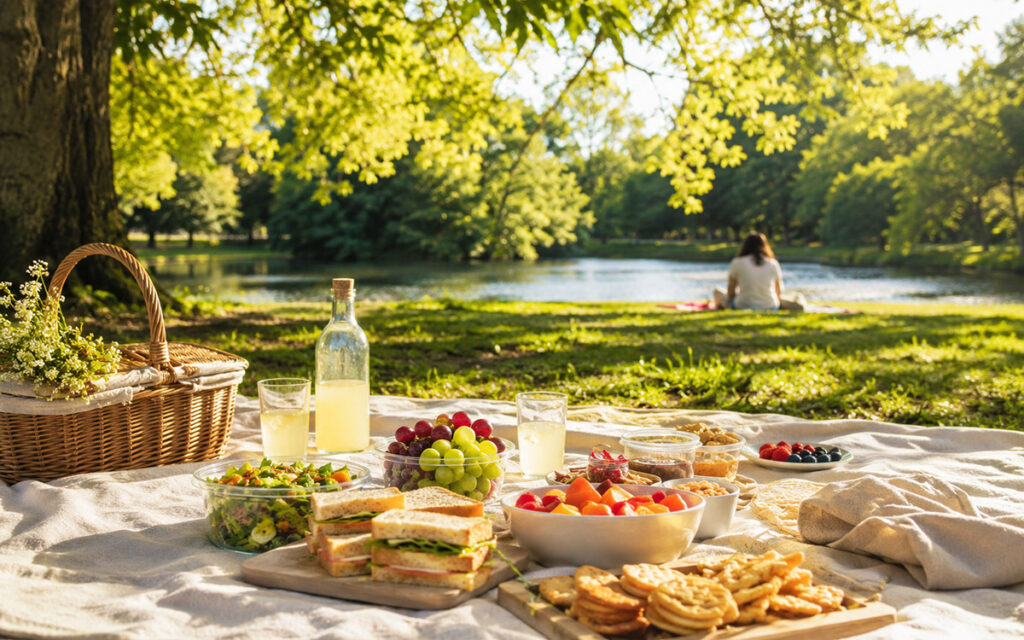
The best picnic foods taste fantastic at room temperature, don’t wilt in the heat, and work well without a kitchen nearby. Think wraps over sandwiches, grain salads over leafy greens, fresh stone fruit over berries, and sturdy treats over anything with frosting. This guide covers what to pack, what to skip, and how to keep everything fresh from the car to the blanket.
A picnic sounds simple until you’ve unloaded a bag of warm, soggy sandwiches and a salad that has wilted into sadness before you even found a spot to sit. Warm weather changes the rules of outdoor eating in ways that are easy to underestimate.
The good news is that a genuinely great picnic spread isn’t harder to pull together than a bad one. It just requires choosing the right foods from the start: things built for heat, designed for sharing, and able to be eaten with your hands or a single fork without turning into a disaster.
Here’s what actually works at a summer picnic and why.
Sandwiches and Wraps That Actually Travel Well
The best picnic sandwiches are built on bread that holds up without getting soggy. That means crusty baguettes, ciabatta, or sturdy sandwich rolls rather than soft white bread that collapses under damp fillings. Wrap fillings in lettuce leaves before tucking into the bread to create a moisture barrier. Or skip bread entirely and use large flour tortillas for wraps, which seal and travel beautifully.
Keep dressings and sauces in small separate containers and add them just before eating. A chicken Caesar wrap that travels in two pieces (wrap + dressing) will taste significantly better than one assembled the night before. Taste of Home’s picnic collection notes that cream cheese-based spreads (like cucumber cream cheese on crusty bread) hold up particularly well in warm weather because they don’t break down the way mayo does.
Caprese sandwiches (mozzarella, tomato, basil, and olive oil on ciabatta) work beautifully if you add the oil and basil at the picnic site. Prosciutto and arugula on baguette. Hummus and roasted vegetables in a wrap. Each of these holds up, travels well, and tastes delicious at any temperature between cool and warm.
Salads That Hold Up in the Heat
Leafy green salads wilt. Grain salads don’t. For warm weather picnics, swap arugula for farro, quinoa, or Israeli couscous as your base. These grains absorb dressing and actually improve over time rather than collapsing under it. Add roasted or raw vegetables, fresh herbs, cheese if desired, and a sturdy dressing.
Chomps’ outdoor picnic guide recommends bean salads as particularly reliable: canned chickpeas, white beans, or black beans tossed with diced cucumber, red onion, fresh parsley, and a lemon vinaigrette keep well for hours and travel without refrigeration if kept in a cooler.
A pasta salad made with a vinaigrette (not mayo) is another solid choice. Cook pasta al dente so it doesn’t turn mushy, toss it with olive oil while warm, then add your additions (olives, sun-dried tomatoes, artichokes, and basil). Potato salads work best with mustard or olive oil-based dressings rather than mayo-heavy versions in summer heat.
Grain salads improve with time. Pack them first, eat them last, and they’ll be better for the wait.
Fresh Fruit and Snacks for the Spread
The right fruit makes a picnic. The wrong fruit can ruin a picnic. For warm-weather outings, choose stone fruit (peaches, nectarines, plums, and cherries) over berries, which bruise and weep in transit. Whole apples, grapes, and seedless citrus all travel without preparation. If you want to slice melon, do it at home and keep it cold in a sealed container.
Cheese is essential and more durable than people assume. Hard and semi-hard cheeses (aged cheddar, manchego, parmesan, gouda) survive a few hours outside refrigeration without issue. Pair with crackers, a small jar of jam, and some cured meat for a grazing-style spread that guests can return to throughout the afternoon.
Nuts, olives, dried fruit, and dark chocolate round out the snacking spread. US News Health’s guide to picnic foods that won’t spoil emphasizes that the danger zone for most foods is between 40 and 140 degrees Fahrenheit. Keeping your cooler below 40 and packing dry goods separately will keep everything safe and fresh.
Sweet Treats That Won’t Melt in Minutes
Ice cream doesn’t survive a picnic. Neither does anything with buttercream frosting. What survives: dense, chewy cookies (brownies, oatmeal cookies, and shortbread); fresh fruit tarts with a sturdy pastry base; lemon bars kept in a cooler; and anything made with chocolate that’s been tempered properly.
Sturdy fruit crisps and crumbles pack well in individual containers and taste excellent at room temperature. A batch of bar cookies (lemon bars, pecan bars, and blondies) cut into squares and wrapped in parchment travels cleanly and can be left out for grazing. Fresh seasonal fruit arranged on a board with a small container of honey or whipped ricotta for dipping makes a dessert course that requires zero baking and consistently impresses.
For drink pairing, Orangism’s guide to refreshing summer drinks to make at home has good options that travel well in a sealed pitcher or jars.
Drinks to Pack for a Day Outside
Picnic drinks need to stay cold, be simple to pour, and work without a proper glass if needed. The best options: a sealed pitcher of agua fresca or fresh lemonade wrapped in a cooler bag, individual cans or bottles for ease, and sparkling water in cans for people who want something without sweetness. Avoid anything carbonated in a bottle once it’s been opened.
Bring more water than you think you need. Outdoor eating in summer heat dehydrates people faster than they notice, and running out of cold water is the one thing that genuinely undermines an otherwise enjoyable picnic. One liter of water per person as a baseline is a reasonable starting point for a few-hour outing.
California Dreamin’ cocktails from Orangism are worth adapting for a picnic format. Batch them in a sealed container, keep them cold, and pour over ice at the park for a drinks situation that feels curated rather than casual.
How to Pack a Picnic Basket That Stays Fresh
The two-bag system works better than a single basket. Keep perishables (anything with protein, dairy, or cut fruit) in an insulated cooler with ice packs. Keep bread, crackers, shelf-stable snacks, napkins, and utensils in a separate bag that stays at room temperature. This prevents the bread from getting wet and the cheese from getting too cold.
Foodtown’s warm weather food travel guide recommends pre-portioning everything before leaving home rather than packing full containers and hoping for the best. Individual portions pack more efficiently, reduce waste, and make serving on a blanket considerably easier.
Pack a small cutting board, a good knife, and a bottle opener as your only tools. You can prepare everything else by hand. Orangism’s culinary tourism feature makes a particularly strong point about how California’s outdoor food culture, from farm stands to beachside eating, has shaped a whole aesthetic around eating simply and well outside. A picnic done right reflects exactly that philosophy.
Conclusion
A great warm weather picnic comes down to smart ingredient choices: foods that improve or hold steady over time, flavors that taste delicious without heating or chilling, and an honest assessment of how far you’re traveling and how long you’ll be outside. Pack for the conditions, not for the ideal. The grain salad will always outlast the green salad. The baguette will always outlast the sandwich bread.
For more food, drink, and travel inspiration, visit Orangism at orangism.com, your guide to eating, drinking, and exploring with confidence and curiosity.
Frequently Asked Questions
What picnic foods hold up best in hot weather?
Grain salads (farro, quinoa, and couscous), wraps on flour tortillas, hard and semi-hard cheeses, fresh stone fruit, nuts, olives, and bar-style baked goods (brownies, shortbread, and lemon bars) all hold up well in warm weather. Avoid anything with mayo-based dressings, leafy greens, soft bread, or frosted baked goods.
How do I keep picnic food cold without ice melting too fast?
Use a high-quality insulated cooler and pre-chill it before loading food. Freeze water bottles to serve as long-lasting ice packs. Pack food in pre-chilled containers. Keep the cooler in the shade rather than the car trunk. Opening the cooler less frequently extends cold time significantly.
Can I make picnic food the night before?
Yes, and for many items it’s actually better. Grain salads need time to absorb dressing. Bean salads improve overnight. Marinated olives and vegetables taste better the next day. Baked goods store well when wrapped. The things to make day-of are any sliced bread, fresh fruit, and dishes with creamy dressings that should be added just before eating.
What are the best finger foods for a picnic spread?
Cheese and crackers, cured meats, olives, fresh fruit, deviled eggs, small sandwiches or sliders on sturdy rolls, stuffed mini peppers, and cherry tomatoes with fresh mozzarella and basil are all excellent finger food choices. The goal is to have things that you can pick up, eat in one or two bites, and that don’t require utensils.
How much food should I pack per person for a picnic?
A general guideline: one substantial item per person (sandwich, wrap, or main salad), two to three side or snack items to share, and a dessert option. Add 20% more if the outing is active (hiking, beach, sports). Drinks should allow for at least one liter of water per person plus any additional beverages.


